OSAKA HOTELS
ABOUT OSAKA HOTELS
Osaka hotels are a microcosm of the city’s diverse character that blend luxury, practicality and individuality. Whether one seeks the lavishness of a 5 stars establishment, mid-range accommodation, capsule hotel or a boutique lodging Osaka caters to every preference and budget. Each accommodation option contributes to a richer travel experience, integrating seamlessly with the city’s cultural tapestry and ensuring visitors leave with unforgettable memories.
Below list of choice Osaka Hotels quoted in Japan Yen.
ABOUT OSAKA
Osaka is Japan’s third-largest city. It pulsates with a vibrant mix of tradition and modernity that makes it a captivating destination for travelers. Known for its rich history, delectable cuisine and welcoming atmosphere.
ATTRACTIONS IN OSAKA
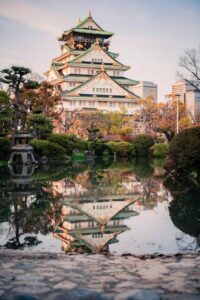
- One of the quintessential landmarks of Osaka is the Osaka Castle. Constructed in the late 16th century the castle played a pivotal role during the unification of Japan under General Toyotomi Hideyoshi (a Samurai turned General). After the death of General Toyotomi the castle was attacked and destroyed by the Tokugowa clan’s army. Reconstruction was done in 1620s. The castle now houses a museum that chronicles the history of the unification of the nation. The top most level offers a panoramic view of the city. The view is breathtaking during cherry blossom season when the surrounding trees burst into pink blooms.
- The district of Dotonbori is synonymous with Osaka’s nightlife and culinary delights. Here visitors can indulge in Osaka’s famed street food from Takoyaki (octopus filled dough ball) to Okonomiyaki (a savory pancake filled with various ingredients).
- The ancient Sumiyoshi Taisha shrine dates back to the early 3rd century and is one of Japan’s oldest Shinto shrines. It’s unique architectural style is characterized by straight lines and a thatched roof. The design diverges from the more common curved roofs of many other shrines. It also has a few picturesque bridges and beautiful gardens.
- Another must visit attraction in Osaka is the Universal Studios Japan (USJ). This theme park offers a variety of thrilling rides and attractions based on popular movies and franchises like Harry Potter, Minions, and Jurassic World.
BEST TIME OF YEAR TO VISIT OSAKA
The best times to visit Osaka are during spring (March to May). The daily temperature ranges from 15C to 24C (59F to 75F). Autumn (October to November) is another good time to visit when the weather is mild and the scenery is beautiful. These 2 season has lower tourist crowd. For those who prefer warm weather, Summer time (June to August) brings hot and humid environment with daily temperatures exceeding 30C (86F). This is also the peak tourist time.
OSAKA DO’S AND DON’TS
Dos
- Chopstick Etiquette: Learn the proper way to use chopsticks, including avoiding sticking them upright in rice, which is associated with offerings to the dead soul in funerals.
- Bowing: Bowing is a common form of greeting showing respect or expressing gratitude especially to the elders.
- Shoes Indoors: Remove your shoes when entering homes, some restaurants and traditional spaces.
- Tipping: Tipping is not customary in Japan.
- Dress Modestly: Dress respectfully and avoid overly revealing clothing, especially in religious or cultural sites.
- Learning Basic Japanese: Even a few phrases are greatly appreciated amongst the locals.
- Punctuality: Being on time is crucial as it shows respect for the other party.
- Be Mindful of Onsen Etiquette: Follow the rules for bathing in onsen (Hot Spring), such as showering before entering and respecting the communal nature of the baths.
Don’ts
- Littering: Avoid dropping trash in public spaces and dispose of it properly.
- Public Nose Blowing: Blowing your nose loudly in public is considered rude.
- Eating While Walking: Avoid eating or drinking while in crowded areas and on public transportation.
- Loud Conversations: Keep conversations at a low tone and avoid talking loudly on public transportation.
- Pointing: Avoid pointing with your finger. Instead use a hand gesture with your palm up.
- Rude Gestures: Be mindful of your body language as some gestures that may be considered offensive.
- Being Direct: Japanese culture often relies on indirect communication, so avoid being overly blunt or confrontational.
- Asking for Favors: Avoid asking for favors directly; instead, try to find a more subtle way to approach the situation.
- Touching People: Avoid excessive physical contact, such as shaking hands or hugging, as it is not common in Japanese culture.
- Disrupting Others: Be mindful of your actions and avoid disrupting the peace and quiet of public spaces.