SEOUL HOTELS
ABOUT SEOUL HOTELS
Seoul hotels not only enhance the travel experience but also provide a glimpse into the city’s multifaceted identity. Whether one seeks luxury, tradition or a unique cultural experience these accommodations serve as a gateway to the vibrant life and rich heritage of this dynamic metropolis. With endless choices each visitor can find an accommodation that ensures their stay is as memorable as the destination itself.
Below list of choice Seoul hotels quoted in South Korea Won.
ABOUT SEOUL
Seoul is the capital city of South Korea and is located in the northwestern part of the country. Yellow sea is located 60km away. A total of 10 million people live here. They identify themselves as Hanguk-Saram (people of Han in the Korean empire of Daehan Jeguk, Daehan Minguk and Daehan Hanguk)).
The city began in 18 BC and was first known as the fortified city of Han (Hanseong). Starting 1394 she became the capital city of the Joseong dynasty and was called Hanyang. The Japanese occupiers during world war 2 called the city Gyeongseong and was renamed to Seoul after the war ended. Today Seoul is home to many Korean manufacturing giants like Samsung, LG, Hyundai, Kia located in the 3 Central Business Districts.
ATTRACTIONS IN SEOUL
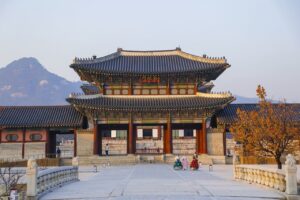
- The Gyeongbokgung Palace, the largest of the Five Grand Palaces, was built in 1395 during the Joseon Dynasty. The palace now houses the National Folk Museum of Korea with a vast collection of artifacts and exhibits relating to Korea’s history and culture.
- The Bukchon Hanok Village showcases the traditional Korean architecture Hanok houses is a must see for visitors here. Visitors can wander through the narrow alleyways lined with restored ancient homes, cafes and galleries. The village overlooks the nearby Changdeokgung Palace and Jongmyo Shrine.
- The modern Gangnam District is a upscale shopping malls (e.g. COEX MALL) with many trendy boutiques that retail the latest Korean fashion. Whilst here, sample the delicious street food and vibrant night entertainment by live street performers along the streets of Myeongdong.
- Namsan Park located at the base of Namsan Mountain features lush greenery with scenic walking trails and breathtaking views of the city skyline. Visitors may hike to the Namsan Tower observation deck for a panoramic views of the city and the surrounding mountain.
BEST TIME OF YEAR TO VISIT SEOUL
The best time of the year to visit Seoul is March to May and September to November when temperatures are mild (average daily temperatures 26C or 18F) .
The summer months (June to August) happens to be the rainy season in Seoul. Daily temperature in Summer time ranges from 22C to 26C (72F to 80F).
The cherry blossum season or Sakura trees turns to full pink bloom in late March. The Gwangyang International Maehwa Festival celebrated in the Gwangyang Maehwa Village also takes place in March.
MORE ABOUT SEOUL
The note currency in Korea are denominated in 1000, 5000, 10000 and 50000 won bills while coins are denominated in 5, 10, 100 and 500. The 1 and 5 won coins are not widely used due to inflationary effect on their value.
Electricity current for South Korea is 220 volts at 60 Hz. Hotels are equipped with the type F power sockets but type C and E plugs are also compatible.
Getting around in Seoul is easy as the city has world class public transportation system. Subways are well connected and is the recommended travel mode. Other available mode of transport include buses, taxis and train.
Seoul is a safe city for tourist to move around in the night time but need to be weary of isolated petty crimes.
SEOUL DOS AND DON’TS
DO
- Take off your shoes indoors — at homes, traditional restaurants, and some guesthouses.
- Use both hands when giving or receiving items (gifts, money, business cards) it is a sign of respect.
- Pour drinks for others (especially elders) and turn slightly away when drinking in front of them.
- Wait for the eldest to start eating before you dig in.
- Be quiet on public transport. Loud conversations or calls are disrespects the tranquil environment.
- Try local food without fuss. Showing openness to Korean cuisine is appreciated.
Don’t
- Don’t blow your nose in public. Step into a restroom instead.
- Don’t write names in red ink. It is bad luck or death in Korean culture.
- Don’t make comments about cosmetic surgery. It is considered rude and intrusive.
- Don’t show extreme emotions in public. Over reacting or being overly loud is considered rude.
- Don’t stick chopsticks upright into a bowl of rice. It is offering for the dead soul in a funeral ritual.
- Don’t hand things with one hand. It may seem dismissive.